Thoughts on teaching, technology, learning and life in an era of change.

Archive for February, 2008

Good To Great Teaching Seminar Part 1
February 28th, 2008

The last few days have been flat out. On Tuesday I ran an all day a pre-conference workshop. Tools that the participants were able to explore included Wordpress [doc], Swickis [doc], del.icio.us bookmarks [doc], Flickr [doc] and Twitter [doc]. It was an interesting workshop and the participants seemingly had a good time.
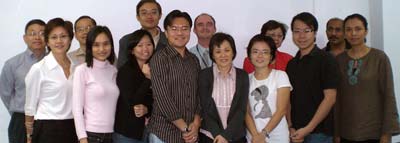
 

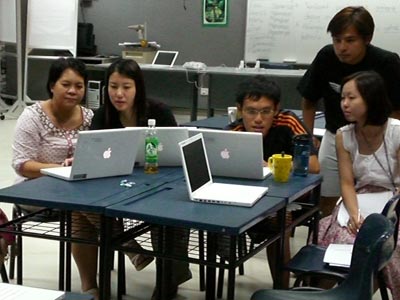
Web 2.0 workshop participants 

On Wednesday I gave a presentation on the read~write web and current developments in the area including mashups, Yahoo Pipes and scraping of sites througgh the use of tools such as Dapper. Some of the audience members are pictured below.
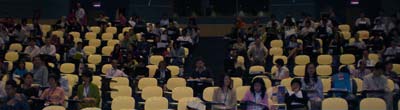
 

The audience 

NTU has an excellent set up and my presentation was recorded by Ian and the team pictured below.
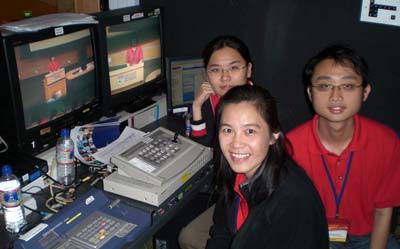
Ian, centre, and her team of helpers 

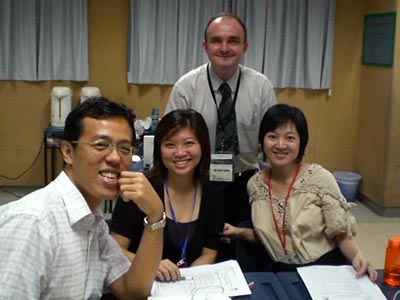
At the conclusion of the presentations myself, Tom Reeves, Sheryl Wong, Paul Gagnon and Westley Field grabbed a few quick photographs. The Good To Great Seminar has been excellent and there has been a lot of buzz and excitement. I shall be coming back up to Singapore in April to follow up on some of the workshops and presentations of this week.
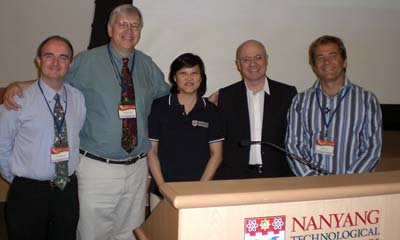
Myself, Tom, Sheryl, Paul and Westley 

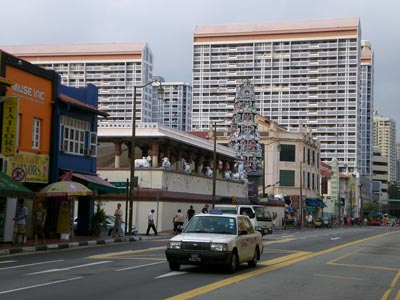
One evening Tom, Westley and I went out for a drink and dinner. We had a beer by Boat Quay and then I took them both for a walk down South Bridge Road to Chinatown. I grabbed a quick photograph of Westley and Tom by Speakers’ Corner. We ate at the Tai Pei Eating House and then went for a walk around Chinatown followed by a visit to the Sri Mariamman Temple. We then walked back to the hotel, past Clarke Quay, across the river and up Victoria Street.
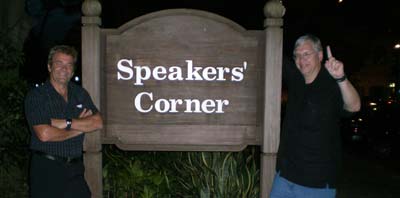
Westley and Tom settle a point of debate. 

Last night I caught up with Siva, Airani and Anand. We had a jolly good time. I drank four or more ice-lemon teas and consumed a healthy amount of popiah and tucked into an incredibly rich fish-head curry that just about blew my head off. It certainly cleaned out the cobwebs from system. 
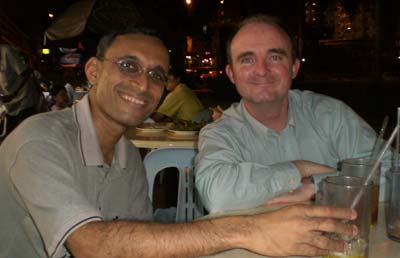
Anand and myself 
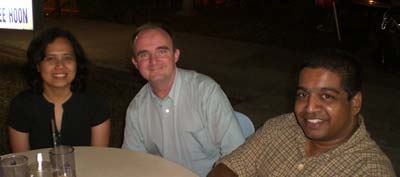
Aiarani, myself and Siva
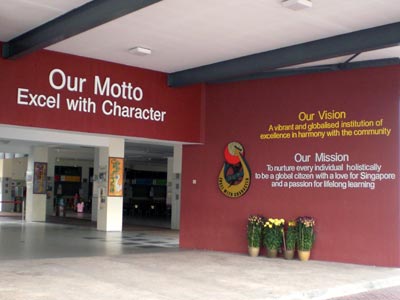
Podcasting and vodcasting workshop at Hougang Primary School ~ Singapore
February 25th, 2008

This morning I awoke early, reworked a powerpoint for today’s presentation and went downstairs and grabbed a taxi to Hougang Primary School. Wai Tuck, my friend at the school had emailed some teaching programmes from the school and I generated some ideas for possible podcasting scenarios in preparation for today’s podcast workshop. I arrived at the school at 7:30AM and Wai Tuck graciously organised some breakfast for me. I had spaghetti with a spicy curry, plus some juice, fruit and coffee. Singaporean schools have excellent canteens with a large variety of freshly cooked hot food ~ Chinese, Malay, Indian and even Western food. I had a nice curry with rice, chicken and dried anchovies for lunch as well. Beautiful!

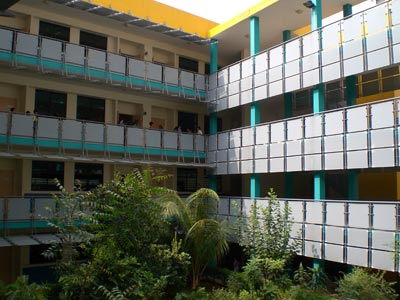
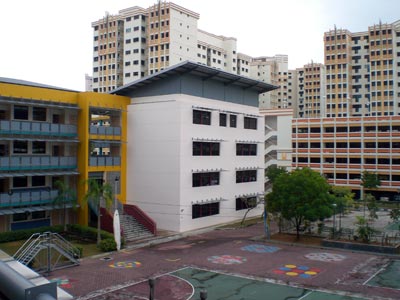
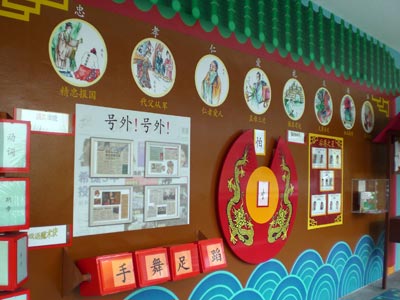
Hougang Primary School is a neighbourhood school. It is surrounded by Housing Development Board blocks and sits opposite Hougang Secondary School. It is an incredible primary school. It is four storeys high. It is colourfully decorated throughout. It is has incredible facilities and includes an agricultural plot, live animals and birds, a fernery, climbing walls and even a modern, well-equipped dental facility. The technology facilities are also incredible. The students were polite, graceful, greeted me as they passed and made one feel most welcome. That is one thing I miss a great deal when I am back in Australia. I shall post a gallery of photographs tonight if I have time.

I conducted two podcast workshops today. One was held in the morning from 9:00AM to 12:30PM for those staff that taught during the afternoon shift at the school. Then I conducted a second workshop from 1:30PM till 4:30PM for those staff that taught in the morning. Singaporean teachers do work very hard. The school day starts with assembly at 7:30AM each day and completes at 6:00PM. There were about 90 participants in all. All of the participants were attending the workshop during their free time. The teachers often conduct and supervise extra curricular activities before or after teaching time and as a result the average teacher is spending approximately ten hours each day at school.

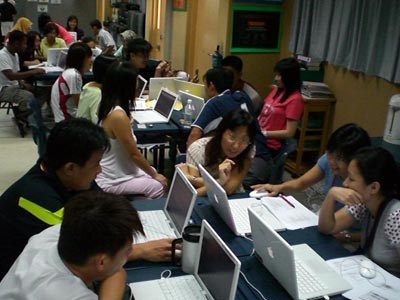
It was quite a task today. I covered GarageBand [pdf], Audacity [pdf], Quicktime [pdf], ProfCast [pdf] and Propaganda [pdf] during the course of the three hours. During the afternoon session I added Blogger and illustrated how easy it is easy to set up a vodcast using Blogger and a simple RSS feed subscription in iTunes. The upload did not go that smoothly however I think I managed to get the point across. I have added some photographs of the participants below. Resources utilised for the podcast workshop can be found at this dedicated page.

At the end of the day I went for a tour around the school and then took a number 235 bus to Hougang MRT and caught a train to Clarke Quay MRT. I walked up Eu Tong Sen Street to the Funan Centre, banked the cheque I received for today’s workshop and walked back to the hotel. Took a break, wrote this post and now I will grab a bite to eat. I am off to Nanyang Technological University in the morning to conduct a pre-conference workshop. Topics being covered tomorrow include Wordpress [pdf], Swickis [pdf], del.icio.us bookmarks [pdf], Flickr [pdf], Twitter [pdf] and whatever takes the participants fancy in that wild and woolly world that is the read~write web.

Singapore ~ Sunday 24th February 2008
February 25th, 2008

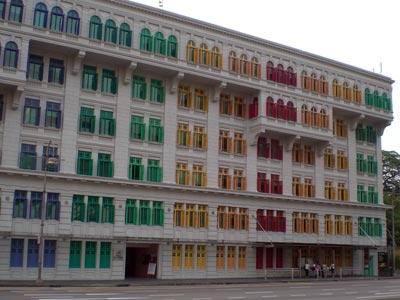
After settling in at the hotel I walked over to Victoria Street, past the National Heritage Board building pictured below and caught a number 2 bus down to Eu Tong Sen Street, alighted in Chinatown, and went for a walk to my favourite eating haunt. I used the integrated electronic ticketing system that one can use with the trains and buses here in Singapore. If only they could get it to work in Sydney.

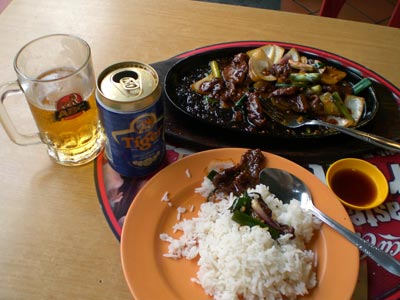
Shao Ping and I used often ate at the Tai Pei Eating House in Trengannu Street. My meal was predictable. The staff know what I will order. I always have the hot plate beef with ginger and some vegetables plus a little chilli sauce. And steamed rice. And a glass of beer. I followed that with home-made ice lemon tea.

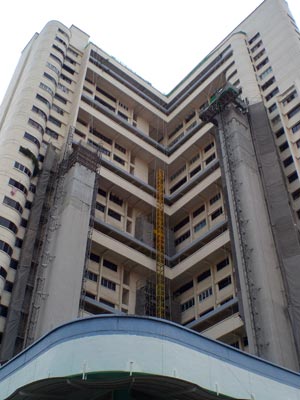
Singapore is constantly changing. I would not be surprised if Singapore forms part of the definition for change in the Oxford dictionary. As I walked through Chinatown I noticed that the Housing Development Board flats were being upgraded. Lift wells that serviced every floor were being retrofitted to the structure. Prior to that the elevators stopped at every sixth floor. A resident that lived on the 8th floor, for example, would alight at the 6th floor and climb the stairwell to the 8th floor. Compare the photograph of the block below with this one taken in 2003 and this earlier view from 2000.

I went for a walk around Chinatown after dinner. I noticed that the Hong Lim Housing Development Board flats had also been given a fresh coat of paint. That is the third upgrade I had witnessed for these flats during the last three years. Some of earlier photographs of the same area taken in 2000 can be seen here.

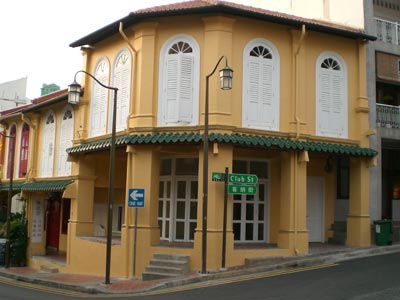
I kept walking and taking more photographs as I had done in 2000. The old building on the corner of Ann Siang Road and Club Street has been renovated. It had been in a sad state back in 2000.

During my stay in Singapore I had taken many photographs around the Chinatown area documenting the change, the people and the events. These photographs area available in these galleries: Chinatown Scenes 2003Chinese New Year 2003Singapore Visit April 17th 2005 and the View from Chinatown 2000.

Hitched a ride to Singapore on the A380 Airbus
February 24th, 2008

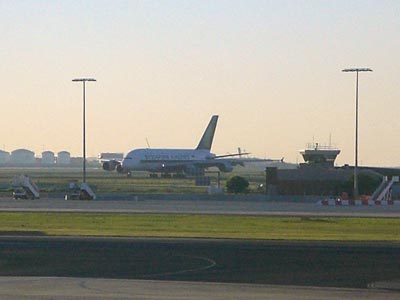
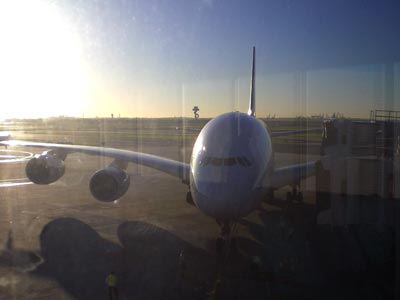
Today I had the very good fortune to fly from Sydney to Singapore aboard one of Singapore Airline’s new Airbus A380 jets. As I waited in the departure lounge I managed to capture a couple of photographs as it landed. I used digital zoom so the images are not that clear.

After that I took some photographs of the A380 as it was divested of its pasengers and cargo. the sun was streaming in from behind the subject. The glass was double layered. I was intrigued by the shape of the wings and the profile of the fuselage.

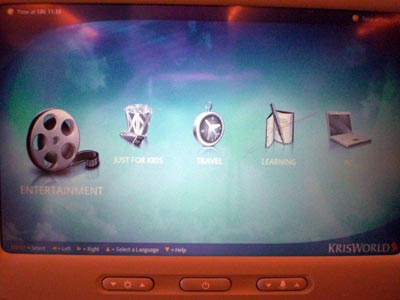
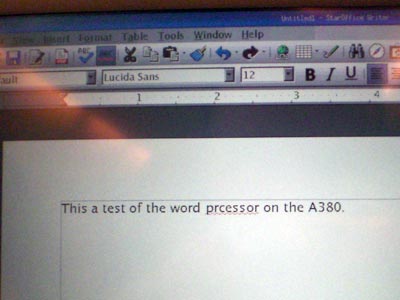
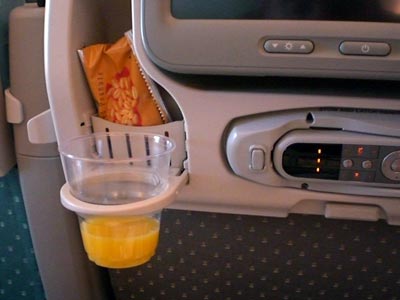
The inflight entertainment system was excellent. There were hundreds of movies and television shows on demand. Countless music tracks. You could even create your own playlist. In addition to that there were news-feeds from AAP, language lessons, business lessons and a built in OS that allowed you to create a word processing document, spreadsheets and the like.


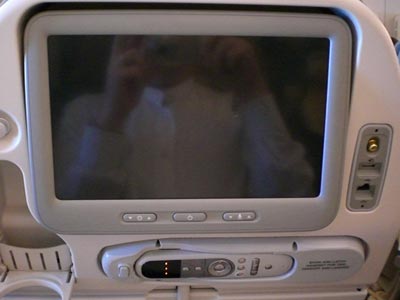
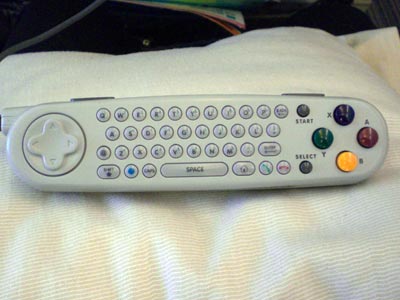
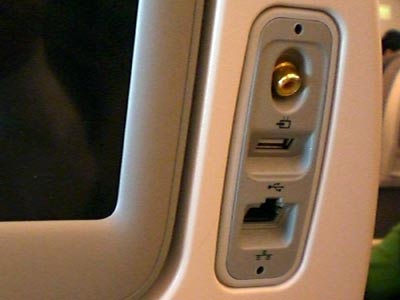
The controller sat in a recess beneath the extra large video screen. It was not located in the arm rest. The controller also acted as the keyboard and mouse. On top of all this you could save your work to your thumb drive courtesy of the USB port. There was also a video jack and a network port that was probably Ethernet.


Podcasting workshop at Hougang Primary School
February 21st, 2008

This Monday I have the good fortune to be conducting a podcasting workshop for staff at Hougang Primary School in Singapore. Thirty staff will be attending a morning session and fifty staff in the afternoon. It will be quite a day.

The teachers will be working with MacBooks and as a result I shall be sharing GarageBand (guide), ProfCast (guide) and Audacity (guide) with the teachers in addition to a variety of strategies and tactics. I will share some Windows based solutions (guide) as well.

Podcasting is an interesting beast. Students at our school have created podcasts, the first back in 2005. Where are they now? On a server, a back-up somewhere. This is often the way with projects, technology and otherwise.

Podcasting. Needs focus. Collaboration. Longevity. Podcasts can become lost, buried, discarded. Focus and direction can give podcasts life.

Years ago I had the chance to observe and work with a group of Year 6  students on a web publishing project. It was Woodlands Primary School. About 1999. Small groups within created a site dedicated to one aspect of a course that was to be examined at the end of the year. During the following year the next cohort further developed the web sites and added audio and visual components. The site evolved and was developed by successive students. It evolved a life of its own.

This is the type of approach I like to see with podcasting projects. Longevity. Students can be rostered to create a podcast on a specific topic scheduled for publication at a particular time of year that relates to the course structure.

I shall write more on this topic during the coming days. Resources for the podcasting workshop can be downloaded from this page.

WebNode guide and overview
February 19th, 2008

Last January I blogged about a new web publishing tool, WebNode. It is part of a new breed of web publishing tools that live entirely within the browser.

WebNode is an online tool that allows you to create functional and elegant web sites. The interesting thing about WebNode is that fact that you do not need to know the intricacies of html, css, xml or javascript in order to create the web site. You do not need to install or use any software.

Prior to the development of online tools such as WebNode users had to master web construction tools such as Dreamweaver, Microsoft Frontpage or others in order to develop a web site. Now, all the user needs to do is to put their existing ideas in order, gather together the necessary words and images and publish.

WebNode is forgiving and supported with a variety of plug-ins and widgets that together can make the job of online publishing straightforward, rewarding and fun. The construction process involves the use of templates and widgets that you can alter to meet your needs. In addition to this WebNode provides you with a rich statistics package that will help you to gain an understanding of the numbers and demographics of visitors to your site.

Recently I created a worksheet or “cheat-sheet” that provides an overview and hands-on guide for the tool. The worksheet is listed on my resources page with all of the other technology guides.

Good To Great Seminar ~ Singapore 2008
February 19th, 2008

This Sunday I am off to Singapore to participate in the Good To Great Teaching and Learning Seminar at Nanyang Technological University. The focus will be technology and how it can harness linkages between students, teachers and learning.

I have had the good fortune to attend the seminar in  20052006 and 2007. In addition to the presentations there is a sequence of concurrent sessions and full day workshops for the participants.

This year I will be conducting workshops on blogging, mashups and new tools such as WebNode. Some of the workshop materials are available here. I am still mulling over the content for the presentation yet the focus that seems to be drawing me in is the world of core tools like blogs and wikis and the role that orbiting worlds like Twitter play in forging connections. Tied in to all of this is the possibilities afforded by Yahoo Pipes for example. I shall endeavour to share, blog or twitter as often as possible during the four days.

Empathy in history
February 19th, 2008

One of the attitudinal skills that students need to pick up as part of the course in history is a knowledge and appreciation of empathy. A strategy that I have employed  is to exhibit some dramatic and iconic images from history including the Hindenburg tragedy, the 2004 Asian earthquake and tsunamiAustralian Ash Wednesday bushfires and the 1986 Challenger disaster. Still images and video are shown to the students.

The students are asked to comment and ask questions about the events and words that came up in the discussion include sympathy, shock, sadness and surprise. The students realise that the images are history. The text book has a dry old paragraph about empathy. They appreciate that history is about people. The students seemingly gain a grasp that history is about people and that people in the past have feelings, views, opinions and emotions as we do today.

Watching the video downloaded from YouTube and the images gathered via Picture Australia and Google search provided the visual resources that I needed for the lesson. The Internet proved very resourceful indeed.

I used Tooble on the Mac to download the videos from YouTube. Following download the flv files were converted on the fly into mp4 files and exported to iTunes.

Can anyone recommend a similar application for downloading and converting YouTube style embedded video files on the Windows XP or Vista platform?

The northern Illawarra coastline
February 10th, 2008

This afternoon Shao Ping and I went for a drive along the northern Illawarra coastline. We had a coffee at Oskar’s alongside the recently renovated Anita’s Theatre in Thirroul. After that we traveled further north, crossing the Sea Cliff Bridge and then up the mountain for the drive back towards home.

On the way we stopped by Sublime Point Lookout and I took a few photographs of the northern Illawarra coastline. The Illawarra is located between the mountains and the sea and as you drive further north the coastline narrows until the mountains reach the sea. The scenery is quite spectacular and many of the locals take it for granted. We need to remind ourselves from time to time just how great the coastline is along the NSW coast.


WW1 ~ The experiences of an English soldier
February 10th, 2008

This morning, one of my colleagues, Flora, alerted me to this excellent historical blog. It is the WW1 letters of William Henry Lamin. As the blog author indicates the blog itself is made up of transcripts of Harry Lamin’s letters from the first World War. The letters will be posted exactly 90 years after they were written. This is not unlike the famous Pepys Diary I have blogged about elsewhere.

The details and comments provide minute detail regarding the life of an English soldier during the Great War 1914-1918. There are two related blogs that support the blog containing Harry’s letters. One blog is concerned with readers’ comments and the other is the official War Diary of the 9th Battalion of York and Lancaster Regiment.

These three blogs comprise an excellent resource of primary source evidence for students of history anywhere. I shall certainly be sharing these blogs with my Year Nine students and my other history teaching colleagues.

Quick slideshow on a Mac using Leopard OSX
February 9th, 2008

Some of you may have seen my guide for creating a quick slideshow on a Macintosh using a simple folder of images in OSX. If the Leopard OS is installed on your Macintosh you can quickly create an interactive slideshow using CoverFlow or QuickLook.

You begin by creating a folder and moving all of the desired images to that folder. Yesterday I downloaded a series of images from the State Records of NSW in preparation for a history lesson on the bubonic plague in Sydney. The lesson was for three separate Year Nine History classes with 30 students in each class. The folder of 20 images is illustrated below. The images are presented in List view.

Change the view from List to CoverFlow by either selecting CoverFlow from the View menu, clicking on the CoverFlow button at the top of the open window or by  typing Command-4. The CoverFlow window view is illustrated below.

If you resize and enlarge the window that is often sufficient for a projected slideshow. In addition, if you select all of the images and then select QuickLook from the File menu. This will set up a slideshow that you can resize to full screen.

You can also initiate QuickLook by clicking on the QuickLook button or by typing Command-Y. The controller allows you to progress backwards and forwards through the images. You can also set up a gallery view by clicking on the appropriate button.

The controller disappears from view when you move the cursor to a different part of the screen. The folder may not necessarily solely include images. Documents, movies and other file types can also be explored using QuickLook and CoverFlow.

The Black Death In Sydney 1900
February 9th, 2008

Many of you have probably heard of the Black Death or the bubonic plague. I must note that the Black Death may have not been caused by bubonic plague but back to the point. Sydney, Australia, experienced the bubonic plague during the early years of the twentieth century and the State Records Authority of NSW has created a nice gallery of photographs taken during the time. I have included a photograph of some professional ratcatchers with their haul as well as a photograph of a butcher’s shop.

The gallery, Purging Pestilence – The Bubonic Plague, features 20 excellent photographs as well as an overview of the outbreak. There are also links to government records and files regarding the outbreak. Additional photographs taken during the time can be found with this search of the State records.

This material would be useful as primary and secondary sources for teachers working with Year Nine students in NSW who are covering the history of Australia during the period 1900 to 1914. I shared all of the photographs, via a quick slideshow and an overhead projector, with my students in Year Nine yesterday, across three separate classes.

The butcher’s shop below and this photograph resulted in expressions of dismay and disgust as well as delight. That’s the way a classroom should be. Weave the photographs into a story and let the history stir their emotions. 

The gallery is part of a series of digital galleries that feature stories regarding tragic shipwreckscriminal history, the bushranger Ned Kelly and famous murder cases just to name a few.

Have you ever seen the rain?
February 9th, 2008

I certainly have. The rain has been my key preoccupation for a couple of months now. This week our region had record rain once again. It seems to be a regular event.

Water entered the ground floor of our split level home via an upwelling around the piers as well as from around the concrete slab upon which the ground floor rests. It is not coming in via the doorways or garage door. The water is seeping up through the clay and soil. I assume the water table has now risen following the end of several years of drought. What to do?

I was up all night on Monday through to Tuesday morning monitoring the water levels downstairs. I spent the rest of the evenings this week catching up on rest. If I was on the Internet I was probably checking in on the Bureau of Meteorology web site and its excellent radar. It is raining as I type.

The image above was captured after the previous full stop. I have not been able to make the time to blog or to sift through the posts in Google Reader this week. This morning, I managed to get some time to go through the posts. There were more than 400. I marked all of the posts from the commercial blogs as read and focused on the K-12 and other education blogs. There are only seven unread posts now. The rain is still coming down. Sigh.

One year ago we were crying out for rain. Now we need a break from the rain.

Archaeological technique ~ a couple of good web sites
February 3rd, 2008

During the Year Eleven Preliminary Course in Ancient History (NSW BOS Syllabus) the students are given an introduction to archaeological technique. Topics include aerial photography, crop marks, dendrochronology, underwater archaeology, managing a dig, carbon dating and so on. There are a number of useful web sites available for students to access. Two sites include Past Perfect and Background On Archaeological Methods. Each site is quite different but useful in its own way.

Past Perfect examines the archaeology of Durham and Northumberland with photographs of digs, artefacts and the region. It incorporates rendered and VRML reconstructions of the sites. It provides valuable insights into the lives of the original inhabitantsbuilding methods and climate change. In addition Past Perfect has a section dedicated to the techniques of the archaeologist. There is a wealth of material to explore within the site. In terms of classroom activities students could explore the site as groups and publish their own findings on nominated sections of the site.

The site, Background On Archaeological Methods is a straightforward site that sets out in plain English the key components of archaeology. It can act as a quick introduction to archaeology for students and the general public alike. Topics covered include site grids, dating, stratigraphy, artefact recovery and record keeping. 

Additional web sites focused upon the techniques of the archaeologist can be found linked to from this dedicated web page.

Teachers, technology and the 21st century
February 3rd, 2008

I have been catching up on Google Reader this week. Just read Dan Meyer’s post Crisis of Faith which is his response to Jeff Wasserman’s blog post where Jeff describes his frustration with technology and his decision to let it go. Jeff’s blog post did not surprise me. It is best that you read Jeff’s original post. Dan Meyer responds by stating that Jeff Wasserman does not have the right to refuse to use technology. Dan’s statement surprised me somewhat. Best to read the comments to Dan’s post yourself.

I have given Google Reader a break recently. There were three reasons for this. First of all my wife and I were busy doing work around the home, I was preparing for the new school year and I had grown tired of reading blogs repeatedly peppered with angst, judgement calls and defenses of this or that position. Give me a blog with simple practical advice any day. Let’s just get on with the job.

There is a term that constantly pops up in blogs that single-mindedly push technology within the classroom setting. The term is 21st century. As far as I can tell this century is not all that different to the previous one. Many people associate the term 21st century with the future if you get my drift. As a ten year old I was looking forward to the 21st century. Well, the 21st century has arrived and nothing much has really changed. The year is 2008. People are not living on the moon. The Concorde has been mothballed. I am certainly not flying to work in an aero-car each day. I am in a car pool to save on petrol costs. The fact that it happens to be the 21st century has no bearing on how I teach or make decisions. I better keep this post to a minimum so I do not become a hypocrite. Cheers, John.