|
|
|
Thoughts on teaching, technology, learning and life in an era of change. |
Archive for the ‘
Travel ’ Category
Dispatches from China 3 ~ Tulou of Fujian Province
January 31st, 2010

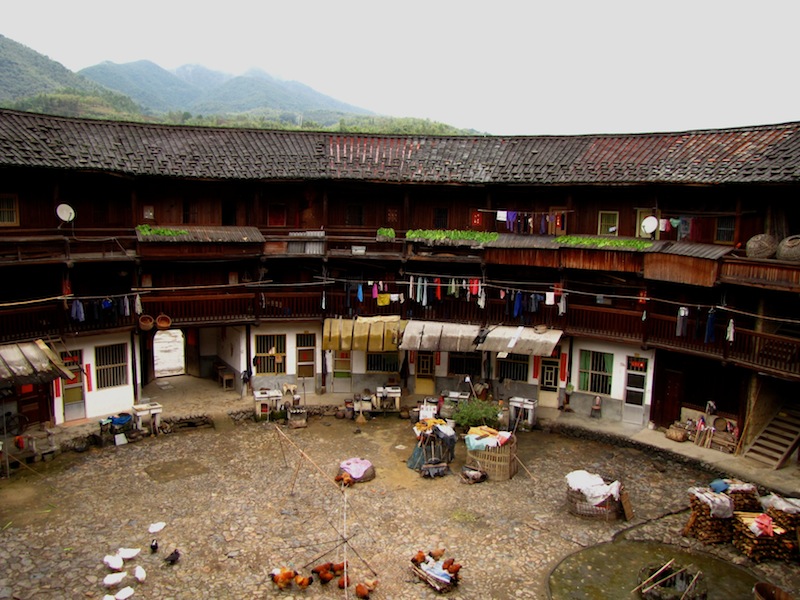
As you may know Shao Ping and I have recently been traveling through China, visiting friends in the main. We traveled to Xiamen, Fuzou, Shanghai and the surrounding areas. We were also able to visit the incredible Tulou [土樓] of Fujian Province. They are protected UNESCO heritage sites. The word tulou means earthen building or earth building.
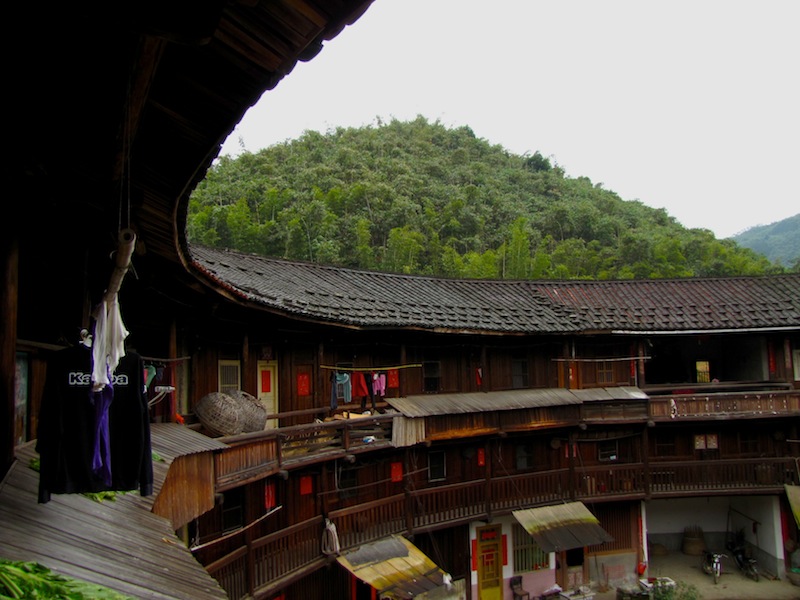
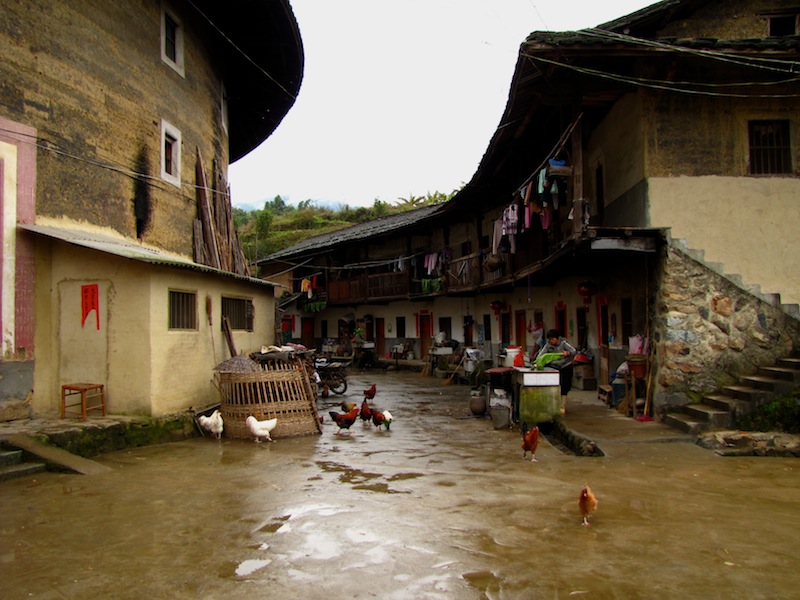
The first three photographs in this post feature interior shots of a Fujian Tulou. They were built by the Hakka people as a defensive, fortified structure. My wife in Shao Ping is Hakka. The tulou are usually inhabited by a related clan group. The families live out their lives within the circular tulou. Some of these tulou are rectangular in shape, others are oval.
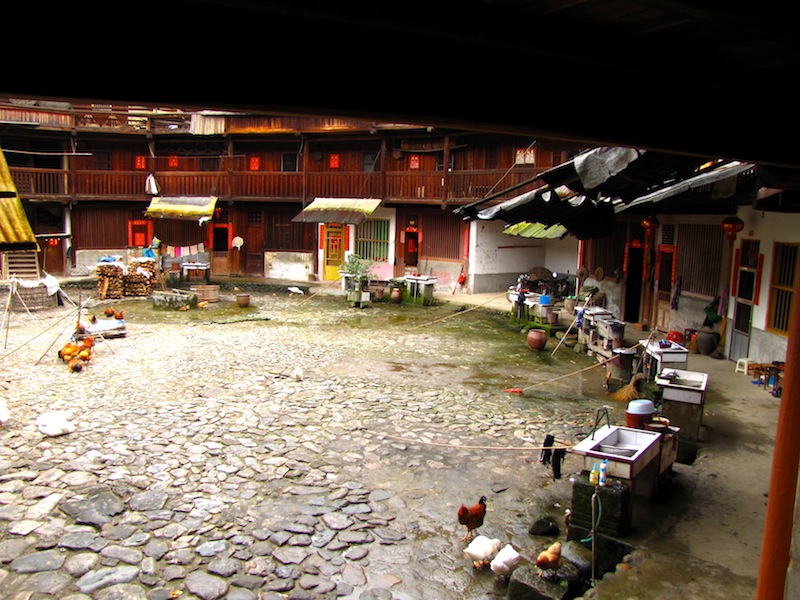
The photograph below shows an exterior shot of the same tulou as well as an adjacent building. Life reverberates in and around these interesting buildings. There are people washing clothes, having a smoke, playing with children and cooking lunch.
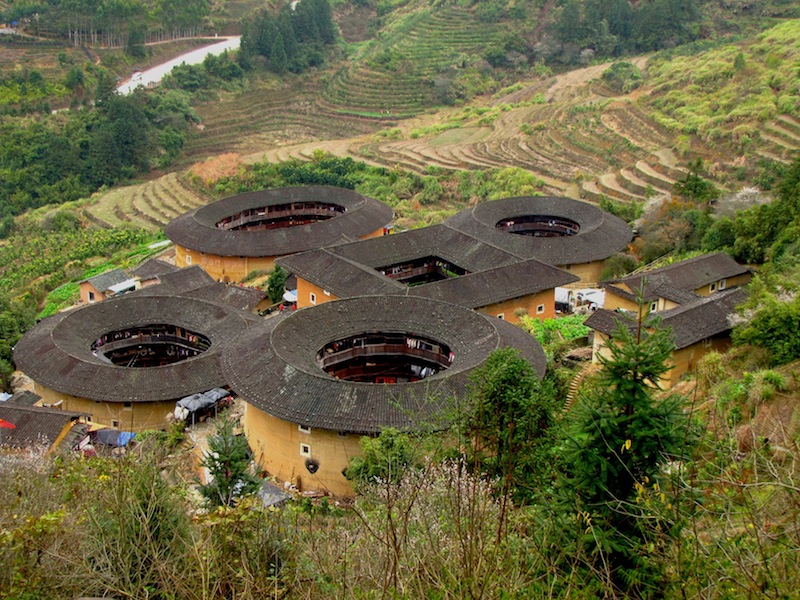
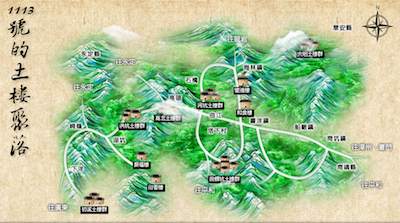
Pictured below is the Tianluokeng tulou cluster [田螺坑土楼群]. This remarkable grouping of buildings is located in Fujian province, Zhangzhou City, Nanjing County, Shuyang Township in southern China. This cluster consists of a square earth building at the center of a quincunx, surrounded by four round earth buildings. Actually one of the round buildings is oval. You can explore its location here. Unfortunately tourism has overwhelmed this particular cluster has been overwhelmed by the impact of tourism. There are many stalls selling souvenirs and other trinkets.
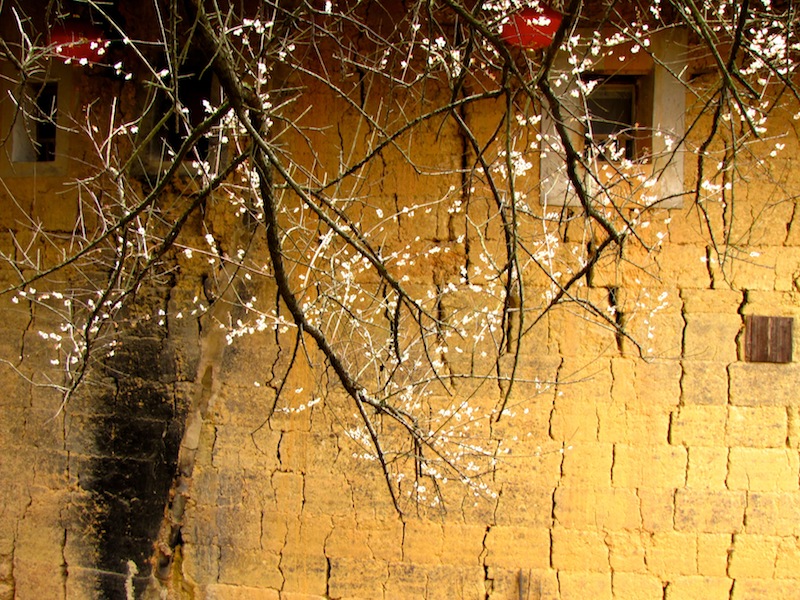
The photograph below gives an indication of the earthen characteristics of the structures. They are quite beautiful. If you ever visit the tulou of Fujian province see if you can visit one or more of the structures that are not on the main tourist beat. Luckily we were able to do so.
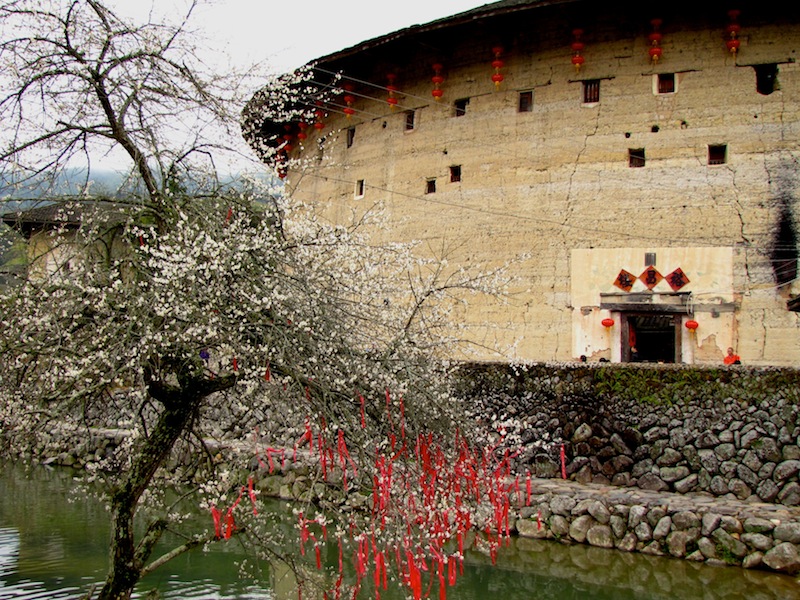
Pictured below is one of the oldest tulou in China. It is the Yuchanglou tulou [裕昌樓 ]. It was construted in 1308 during the Yuan dynasty by the Liu family clan. It is one of the oldest tulou in China. The outer ring of this tulou is 36 metres in diameter and it consists of five stories. There are 50 rooms on each floor.
As the Wikipedia entry for this tulou indicates, “each of the 25 kitchens on the ground floor at the back half of the circle has a private water well beside its stove. This is the only tulou in all Fujian with such convenient water supply”.
There is an interesting web site, based in Taiwan across the straits, that graphically sets out the tulou of Fujian province. The site is titled 福建省旅遊局 : 世界文化遺產_福建永定土樓、南靖土樓、華安土樓.

Tags: China, Fujian, Tulou Posted in
Travel |
No Comments »

Eclipse of the sun ~ Taiwan
January 16th, 2010
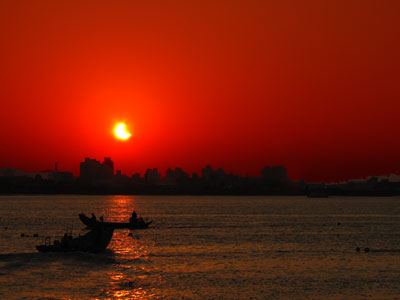
Shao Ping and I took the MRT to Danshui [淡水] in Taiwan today to check out the local sights and to take a few photographs. As we walked along the shoreline we came across a collection of photographers capturing the sunset and also members of the public looking at the sun using special solar filters.

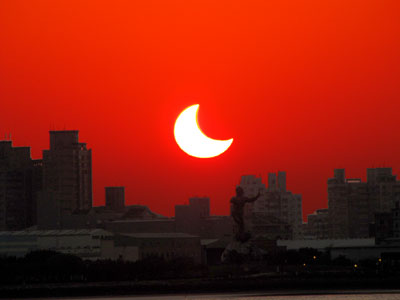
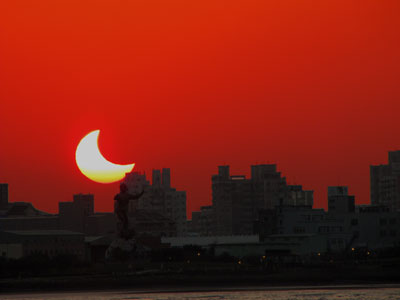
There was a partial eclipse of the sun taking place! It was actually an annular eclipse in other countries of the region. I was elated to discover this and thought why not try to capture the event myself.

We were located on the eastern shore of the Tam Shui River (aka Danshui River) at Danshui looking west across towards an area known as Bali (not the Indonesian island of course). You can explore a Google map to gain an idea of the region and its geography.

We had no idea that the eclipse was to take place and it was a fluke that we were at Danshui on that day and at that time. As sunset approached I set up to capture the event with my Canon camera. I was not that well equipped. I rested the camera on a brick fence, used manual focus, the “Sunset” preset and the timer so as not to disturb the camera as it captured the image. You can observe details of the moon’s track across the sun and an animation of the partial eclipse courtesy of http://www.eclipse.org.uk/.

As sunset approached the sun seemingly accelerated towards the horizon. There was a scurry of shutters opening and closing plus a bevy of photographers changing lenses, adding filters and adjusting their position.

It was a memorable moment for both Shao Ping and I and the event really made the day rather special. Hope you like the photographs.
Tags: annular, Danshui, eclipse, sun, Taiwan Posted in
Travel |
2 Comments »

Dispatches from China 2 ~ Thames Town
January 12th, 2010
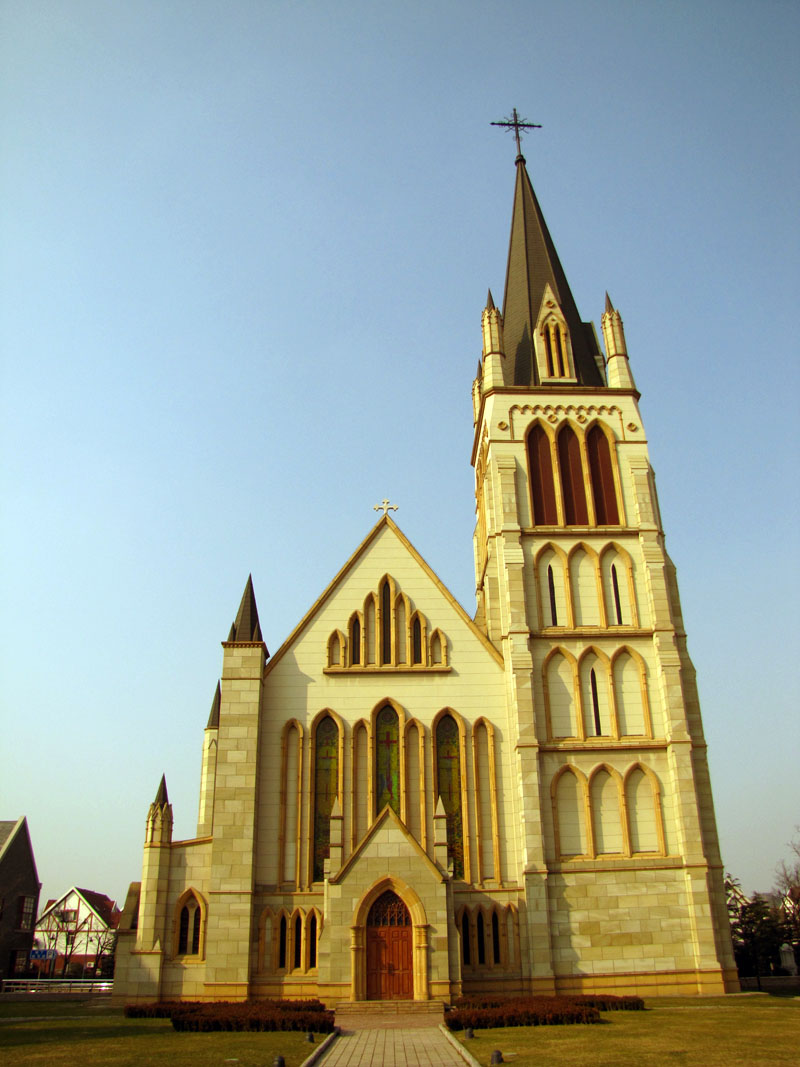
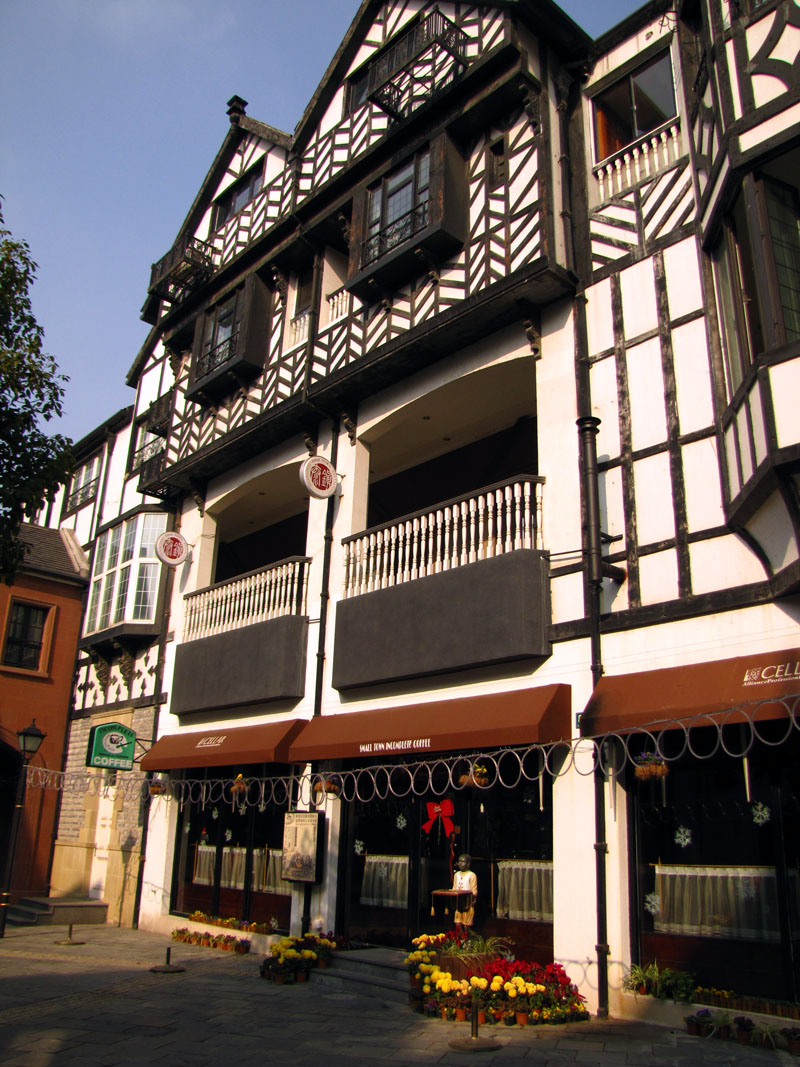
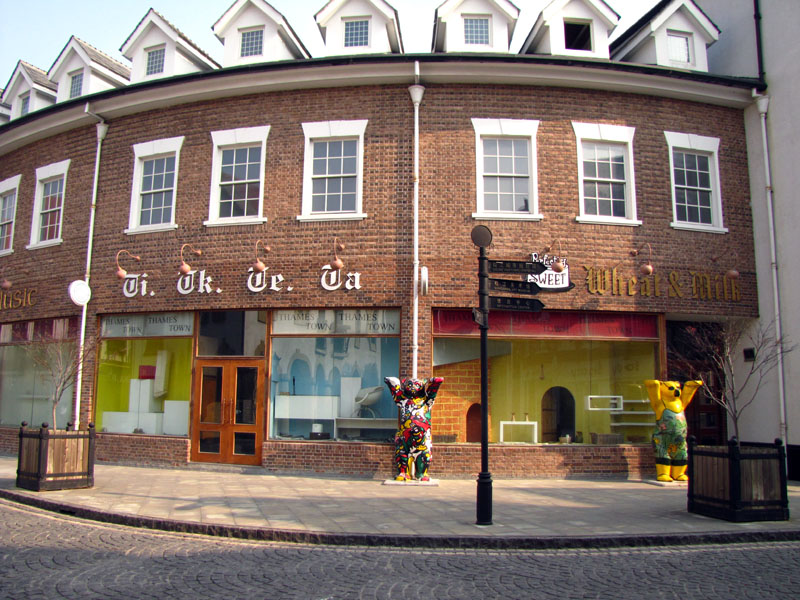
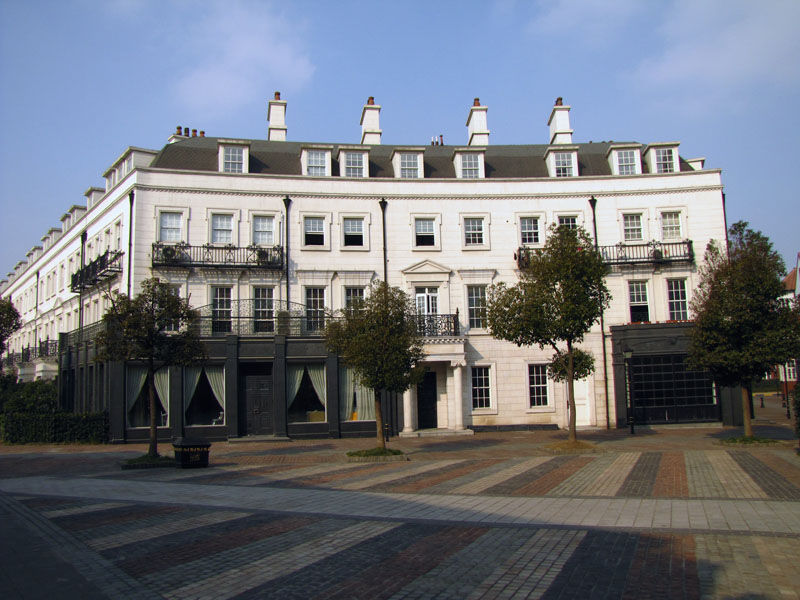
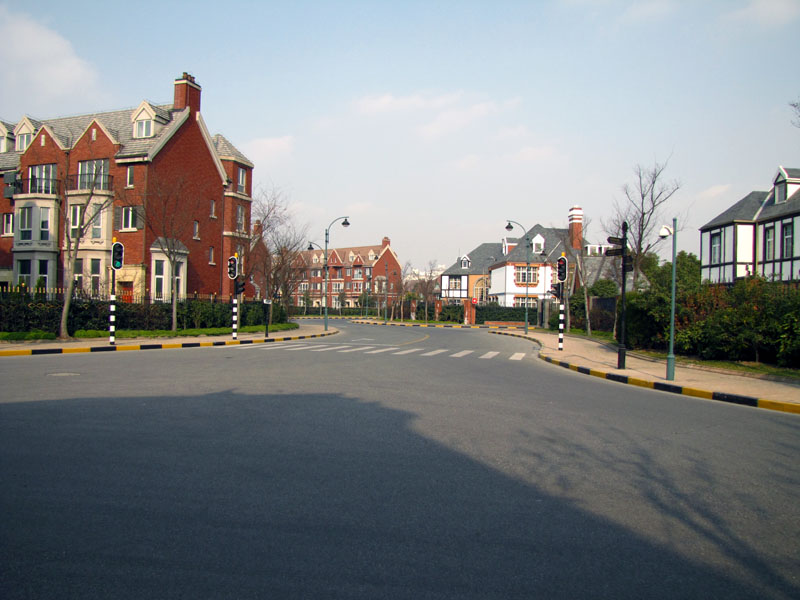
During our stay in Shanghai our friend Crystal and her Mum took Shao Ping and I to Thames Town. This is a new housing development not that far from the centre of Shanghai. It is a recreation of England as you would imagine given the name. I took quite a few photographs as the recreation of the buildings and minor details such as fence posts, signage and the like were quite remarkable. Click on a photograph to see a larger image.

The church above is not real. Well, it is real, however it is not actually used as a church. It is primarily used for wedding photography and tourist shots on the weekends. It seems to be a facade. I could not believe it.

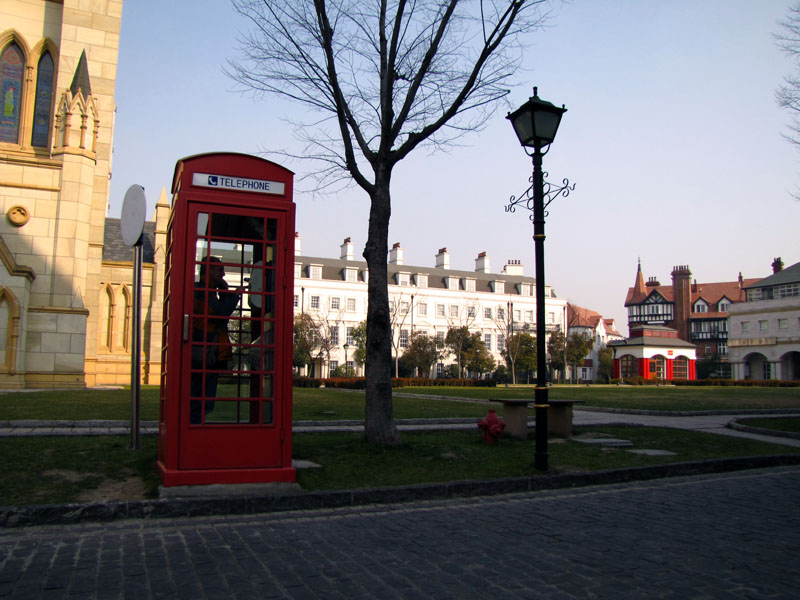
That is myself in the telephone box. It is real. Note the variety of architecture in the rear of the photograph as well as the lamp post.

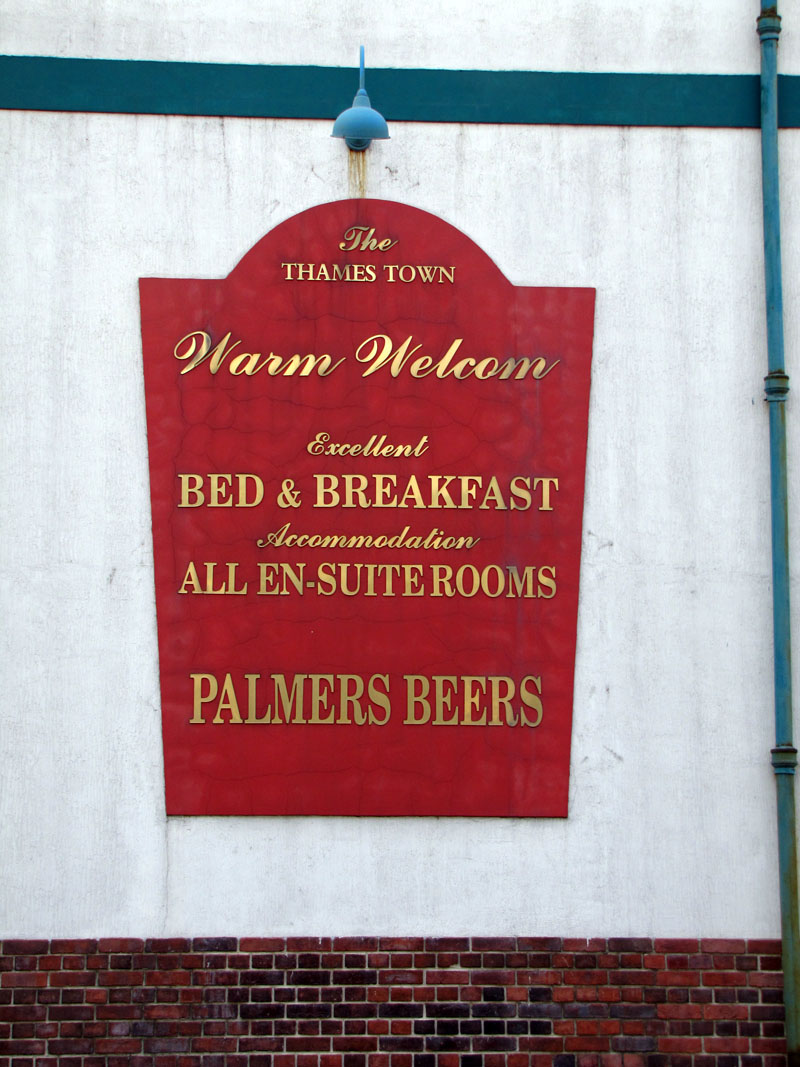
This sign was on the outside of an English pub. It was not in use as yet although it will eventually be a bar and possibly provide accommodation. You will surely receive a “warm welcom”

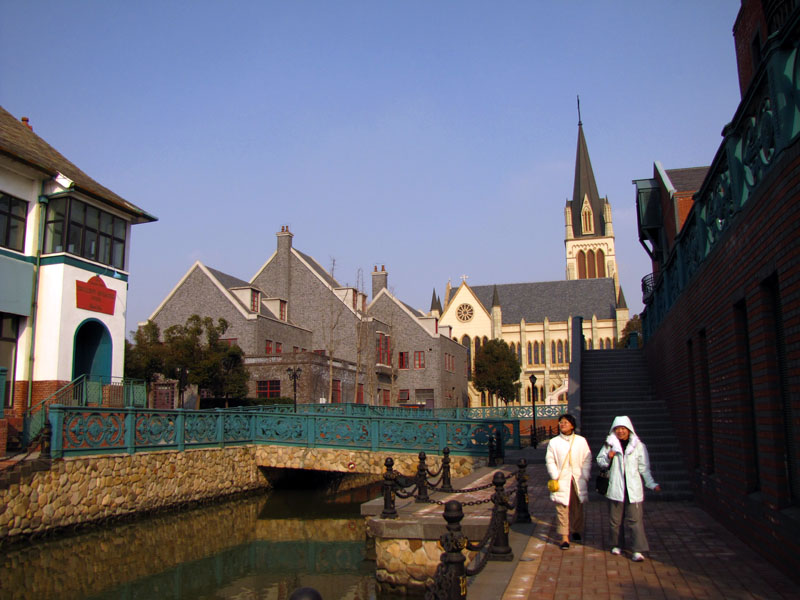
Crystal and Shao Ping walking alongside one of the canals in Thames Town, Shanghai, China. The pub is on the left. The church is visible in the background.

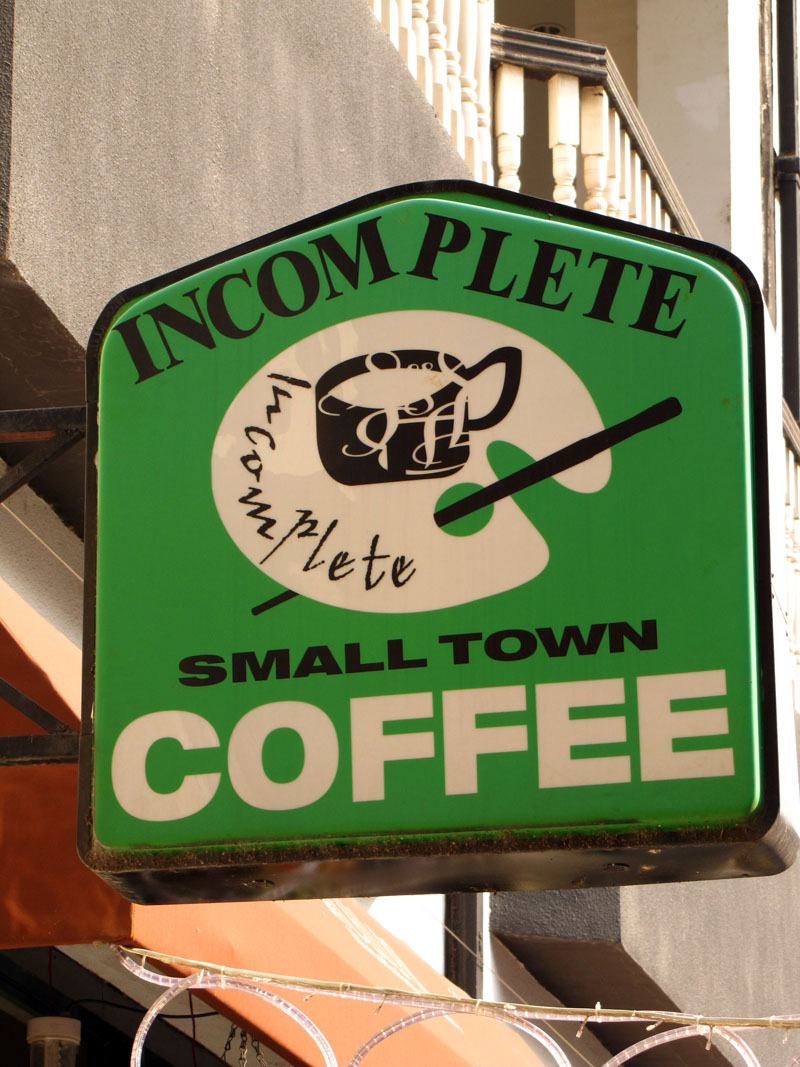
Not too sure about the coffee in this cafe. We moved on and ended up having a vegetarian meal in a temple.

I guess this is Tudor style. The Incomplete Coffee Shop houses one of the spaces in this building.

Not too sure of the architectural style yet the name of the shop and the colourful bears out front are mystifying. Not too sure if England ever had large bears. What is the name of the shop on the left?

Yet another delightful building in Thames Town, Shanghai. Is this Georgian style?

A typical suburban street in Thames Town. People live and work here and house prices are quite reasonable. Strangely enough I would not mind living there. Once the bus and MRT reach the area it will be quite a good position. Shanghai is an amazing place with plenty of events and things to do. Opportunities abound there. Great public transport and facilities for bike riders are excellent.

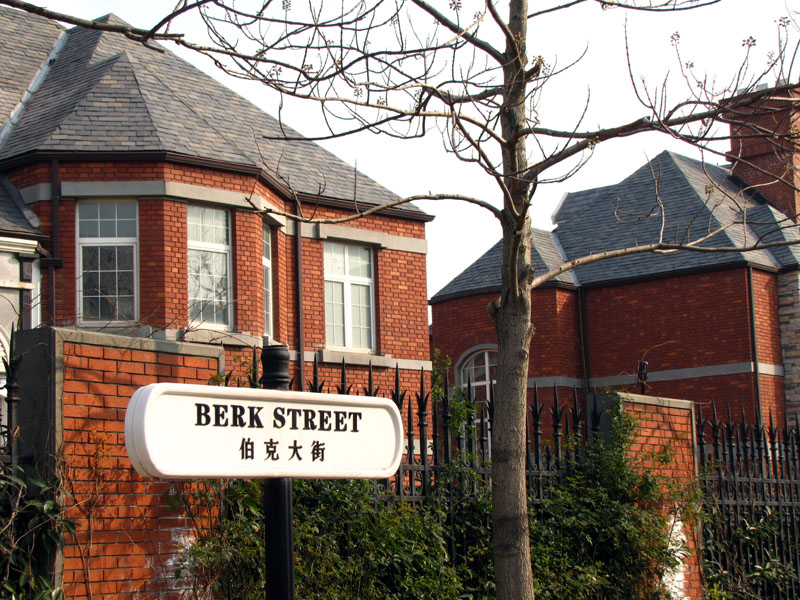
I have left the best to last. This is for all my English readers. How would you like to live in Berk Street?! Amazing, eh? I wonder which English consultant slyly suggested this as a name for a street in Thames Town?
Tags: China, chinglish, Shanghai Posted in
Travel |
No Comments »

Dispatches from China 1
January 8th, 2010

Shao Ping and I have been traveling through China, visiting friends in the main. We have been to Xiamen, Fuzou and Shanghai. Our travels have taken us from the cities into the hinterland. We have covered about 1600 km by road so far. The photographs below have been taken at various points. Let’s see what I can share about each place.

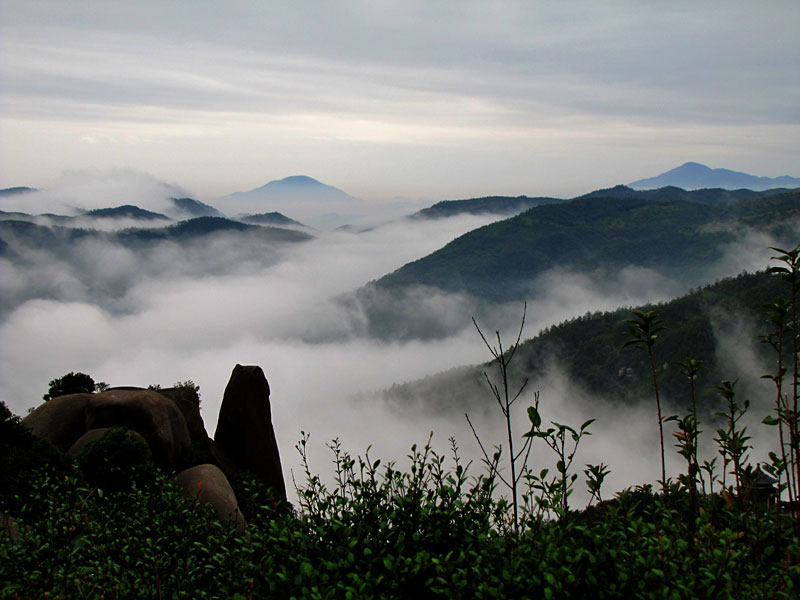
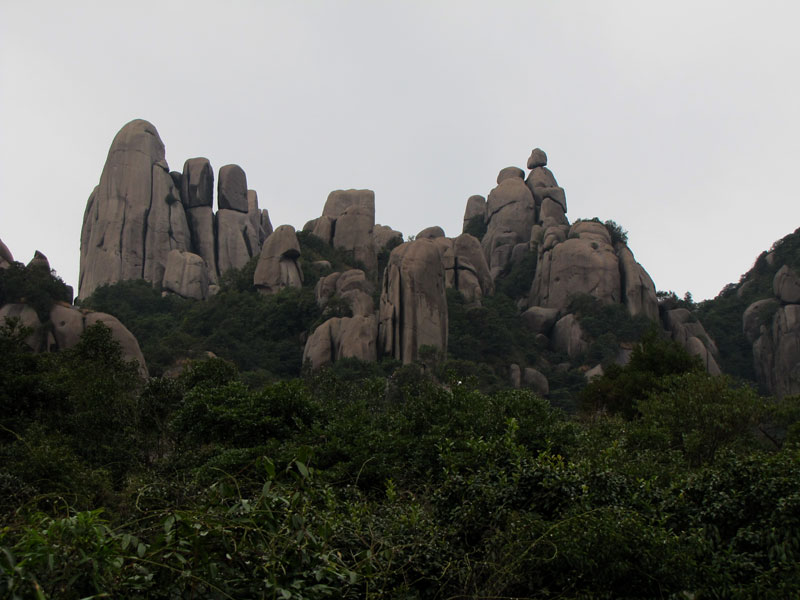
We took a drive with our good friend Shu Lung up into the mountains beyond Fuzhou and Ningde to explore some interesting geological formations and historic towns.

The photograph above shows Tai Mu Mountains. They are located in Fujian Province. They are quite precipitous. We climbed for several hours to reach the summit. The actual highest point was a rock without any safety barriers. They left that to the more hardy souls to explore while I took photographs. The nearest large city is Pingnan.

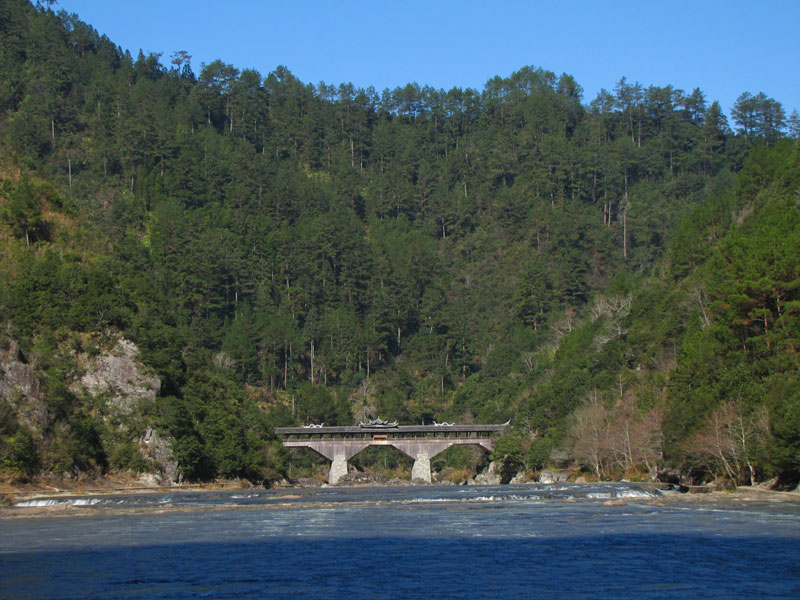
The next day we took a rather dangerous and precipitous drive up into the mountains to Yuan Yang Xi to check out some old Lang Qiao bridges. Yuan Yang Xi is interesting. The river bed is almost perfectly flat and just a few centimetres deep in most parts. One can walk across it with the right footwear. It is shown above together with a Lang Qiao bridge.

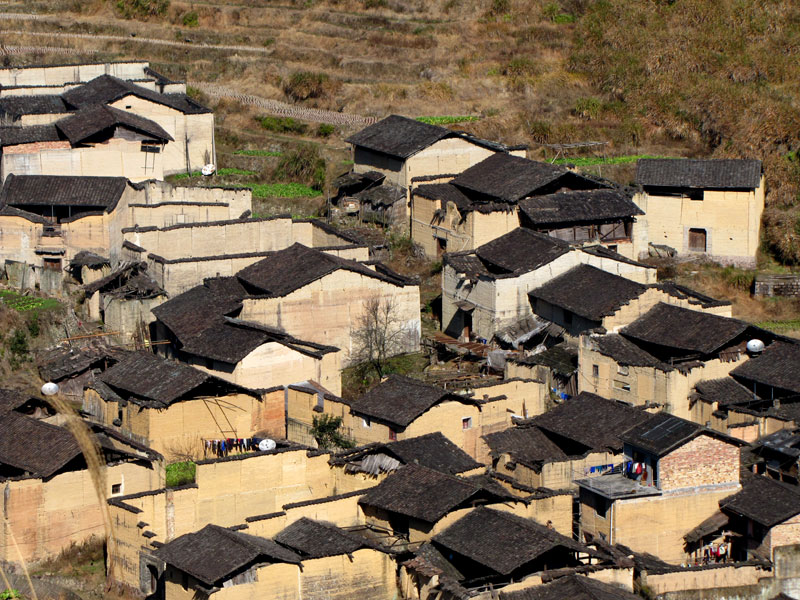
We passed a number of villages and small towns with old homes built from mud brick. They are known as Tu Lou homes. We ventured into some of these villages to meet the locals. Tu Lou translates into “earth buildings”. The houses above were taken on the way to Yuan Yang Xi.

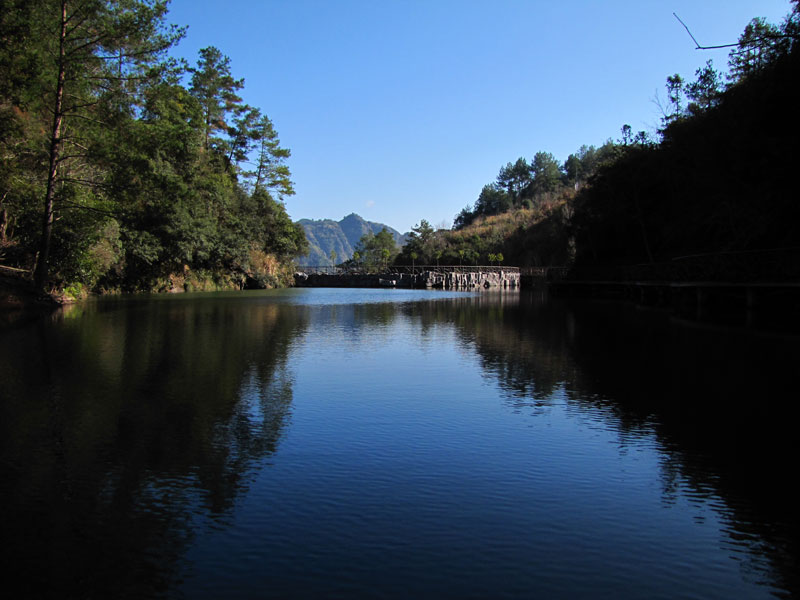
Later that day we went to an area that has only just been recently opened up to the general public. Roads were still being constructed or repaired due to landslides and in fact at a couple of points we had to wait for graders and excavators to shift their position. It was a worry for me. The roads were built into the sides of these precipitous mountains with drops to the valley floor exceeding several hundred metres in most places. There were no guard rails in many parts and the fresh landslides always managed to spook me.
Add those factors to the general craziness of the local drivers and one can understand why I found myself going around the bend in more ways than one. Sign posts and other markers were still being constructed. We were the only visitors that morning and the person in charge of the new national reserve informed that I was the first “wai gau ren” (foreigner) to visit the park. The photogarph above is taken at Yuan Yang Xi. The average altitude of the region was 800 metres plus.

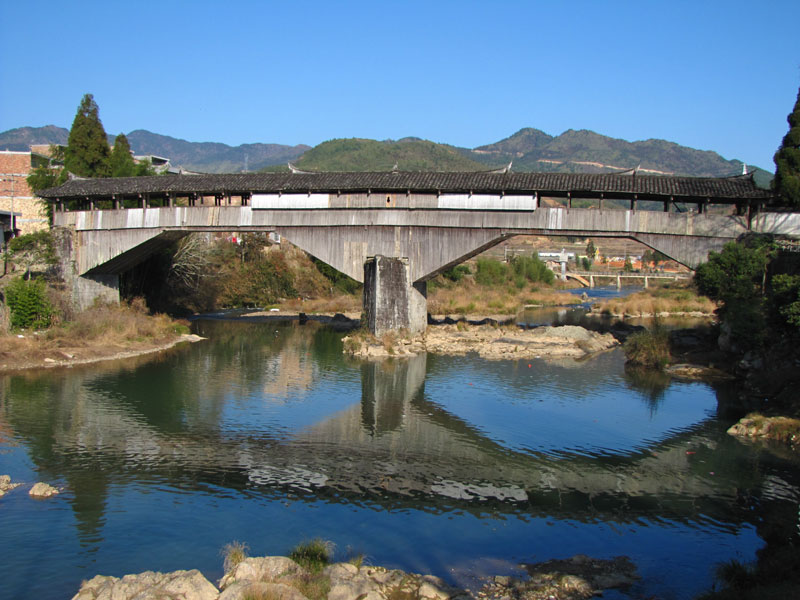
Near Ningde we stopped to check out the Lang Qiao bridge shown above. They are constructed of wood and no nails are used to fix the wood together. These bridges are a dream for carpenters and architects to observe. It is a heaven of tongue, groove, dowel and the like I guess.

We have been up to Shanghai as well. It snowed there just a couple of days before we arrived. It has been quite cold. Shanghai is an amazing city. We stayed with friends in Songjiang, not far from the city centre. It is an amazing place. Songjiang has been recently developed. It is well planned and a nice play to stay. We went into the city and whiled away the time taking photographs, eating, drinking and chatting. More detailed missives to follow as we go across to Taiwan, back to China and then down to Singapore.
Tags: China, Shanghai, Xiamen Posted in
Travel |
4 Comments »

Kuala Lumpur
November 19th, 2009
I have just arrived in Kuala Lumpur, Malaysia. It has been a few years since I was last here. I caught up with my brother Frank one day back in 2002 and before that I did a presentation at an Apple sponsored education technology conference.
I will be conducting a series of “Web 2.0″* workshops for academics from 23 universities from across the region on behalf of the Ministry of Higher Education, Malaysia (MoHE). I will be in KL for 8 days. I am working with Nanyang Technological University (NTU), Singapore, on this project.
Both the MoHE and NTU are taking excellent care of me. They have put me up in an excellent resort in Putrajaya, Selangor state, and they flew me to KL business class which is a first for me personally.
I had no idea I was flying via business class. I was emailed the eTicket. I checked in at the economy counters. Boarded via the economy gate. No-one said anything. I discovered my good fortune when I was directed to my seat. Rather luxurious. I am not used to this. Well, I made the most of it. The seat next to me was empty as well. Bonus.
Since I started my long service leave from school, and let a few people know of that fact, things have started to fall in my lap. Good things. Hard work and passion has its rewards.
*I know the term “Web 2.0″ is a little cliche, dated and so on but it will serve the purpose in this case as it provides a common frame of reference for all involved in this project.
Tags: Kuala, Lumpur Posted in
Teaching, Technology, Travel |
No Comments »


Lemon Tree Passage ~ a gem on Port Stephens
January 29th, 2009
Travelers to Port Stephens often rave on about Shoal Bay and Nelson Bay. Sure, each of these towns have their beauty however after a recent stay in the region I cannot help but feel that if you desire a real, relaxing break with a beauty that is unassuming and, for that matter, real, then you should consider escaping to Lemon Tree Passage on the tip of the Tilligerry Peninsula.

It is a nice spot where one can enjoy the water without the crowds. A little bit of fishing, bush walks, sun-baking, peaceful cups of coffee, a quiet beer by the water’s edge. I must sound like a travel agent yet Lemon Tree Passage was relaxing, uncomplicated and stress free. Just the place for a holiday.
Posted in
Photography, Travel |
No Comments »

Teaching World War One?
January 27th, 2009

Gateway to Tanilba Bay
During a recent holiday on the north coast of NSW my wife Shao Ping and I stumbled across Tanilba Bay. This small town is located on the Tilligerry Peninsula and is part of the Port Stephens region. We explored the town and discovered that a significant number of the streets had been named after individuals and facets of World War One.
View Larger Map
Street names include Lloyd George Grove, Clemenceau Crescent, Diggers Drive, Avenue of the Allies, Conquest Crescent, Navy Nook and Pershing Place.

Development Plan
The town plan consists of concentric circles. I believe that there were hopes that the town would become a significant centre on the eastern seaboard of Australia. There was a historical display near Tanilba House that included images of the original development plan from the early 1930s.

Tanilba House
This interesting and attractive little town could form the basis of a research assignment for a history class studying World War One. Who planned the town? Why did they choose those particular street names? Who was Pershing? What was a Pershing boot? Who was Clemenceau? Whey do we remember them? How is the Great War remembered in your town?
Okay fellow history teachers…. here is my challenge for this week. How would you use this knowledge of Tanilba Bay in your teaching of history? I am thinking of asking my students to design a town that utilises a different historical event as the basis for the nomenclature within the new town.
Posted in
History, Teaching, Travel |
No Comments »

Amazing Stockton Beach, NSW
January 17th, 2009

Stockton Beach sand dunes, looking south.
Earlier this week Shao Ping and I had the opportunity to explore Stockton Beach, south of Port Stephens in NSW. The sand dunes of Stockton beach stretch for 32 kilometres and in some areas reach 1 kilometre inland.
View Larger Map
We explored the dunes late one afternoon and then went on an organised tour the following day. The dunes are moving approximately 4 metres in a northerly direction each year.

Northern end of the dunes near Anna Bay.
Tank traps are visible in the foreground.
The dunes feature tank traps that were constructed to deter an invasion by the Imperial Japanese Army during the Second World War.

The dunes can be as high as 30 metres.
The earliest inhabitants of this region were the members of the Worimi Aboriginal tribe. The middens created by the tribe during the previous 12,000 years can be seen at many points along the length of the beach. The middens appear and disappear with the ever shifting sands.

Tin City
As well there is the intriguing Tin City. This is a collection of shacks that had their origins during the Great Depression. They were built and occupied by impoverished Australians. The shacks made way for an army camp during the Second World War and were rebuilt after the war. At this time four men still live in the remaining shacks. They were utilised as a set during the Mad Max movie. It is hard to believe that individuals could live in such an environment. They utilise solar and wind power as well as a groundwater supply. Keeping out the sand must be an ongoing challenge for the four inhabitants.

Guess who?
If you are ever in the Port Stephens and Newcastle region of NSW the Stockton dunes are well worth a visit. Shao Ping and I certainly had a jolly good time. I have uploaded a gallery of photographs of the dunes to my main web site.
Posted in
History, Photography, Travel |
No Comments »

Two memorable moments
December 14th, 2008
I have a couple of favourite photographs. Both taken with a 3 megapixel Sony digital camera about eight years ago. Thought I would write a little about each. The first is of an spider that I managed to photograph in Sungei Buloh Wetland Reserve in Singapore back in 2000. It was hot and humid. I was there with some colleagues who were photographing some of the flora and fauna for a CD-ROM on mangrove environments.
View Larger Map
Location of Sungei Buloh Wetland Reserve in Singapore.
I decided to see how close I could get to this particular spider. I made my way into the undergrowth and crouched down upon the wet damp leaves. I held the camera in both hands and using a simple macro setting eased the lens closer to the spider until it seemed to be in focus. I took the photograph. It is shown below. The spider is a little out of focus. She was busily repairing the web. [I think the spider is female as it lacks tarsal bulbs on its pedipalps]. She seems to have lost one of her legs. View large photograph.

The other was photograph was also taken in a mangrove. This time in Indonesia. My wife and I had taken a holiday in Bintan to get away from Singapore. While we were there we were given an escorted boat ride into a nearby mangrove and I took a number of photographs with the same Sony camera. While we floated along we came across a part of the mangroves where a large number of mangrove snakes were lying on the branches above and alongside the waterway. This species of snake is widespread and is also referred to as a cat snake.
View Larger Map
Location of mangroves in Bintan, Indonesia.
I asked our guide if we could stop so that I could take a photograph. The little boat paused. I grabbed my camera, gently stood up and pointed the camera towards the snake. The boat was swaying to and fro a little. I grabbed a branch with one hand and held the camera with the other. The branch I held is in the left of the photograph. As I grabbed the branch and took that photograph the snake turned to look directly at me. I quickly sat down and the guide backed the little boat out of there. He was worried that I might be bitten or the snake may drop into the boat. View large photograph.

The image is blurred. I did not have the time to focus. Still like the photograph though. I was close. Probably too close. I have been back to those mangroves, with my wife Shao Ping and my nephew Adrian.
Do you have a similar memorable moment captured on camera that you would like to share?
Posted in
Photography, Travel |
1 Comment »


Wandering about Singapore
October 6th, 2008
Arrived in Singapore last night. Woke up this morning. Did some work. Then caught a bus and train into Chinatown. When I took the escalators from the Outram Park MRT Station up to street level I was struck by a wonderful aroma ~ rain. It was raining so heavily. It was wonderful. The rain smelt so good.


Grabbed some lunch. I took a few photographs around Chinatown. I love to see the old and the new mixed up. The tropical lush attempting, yet struggling, to reclaim its territory. Note the building below which is being retrofitted with elevators that stop at each floor. Previously, I think, they stopped at every fourth floor judging by the landings. One would alight and than take stairs up or down to your specific floor.

I went across to Bugis and Sim lim Square looking for a QuikPod but I had no luck.


Grabbed a drink and took a few snaps of people. In particular, the Singapore Malay couple below who were dressed for post Hari Raya celebrations. They both looked so resplendent.

Took the train back to Boon Lay MRT. Like to see the bike racks outside the station. Should be more of that back home.


Posted in
Photography, Singapore, Travel |
No Comments »

Walkabout in Tiong Bahru, Singapore
July 28th, 2008

Tiong Bahru is an area of Singapore that I had not explored before. I had been to the shopping plaza adjacent to the MRT station but I had not explored some of the older areas of the town. I had often traveled past streets that I wished to wander around and during my last trip to Singapore I took the chance to pay a visit to Tiong Bahru.

I took a number of photographs as I walked around the estate. I walked along the following roads: Tiong Poh Road, Kim Cheng Street, Lim Liak Street and Tiong Bahru Road. It is one of the oldest housing estates in Singapore. Some of the buildings date back to the 1930s and feature a mix of art deco and Straits Settlements design. I quite like the estate. There are a few estates, like Tiong Bahru, that are like little ‘islands’ that are cut off from the hustle and bustle of Singapore. They include Bukit Purmei and the Eng Kong estate.

Go to Google Maps
Posted in
History, Singapore, Travel |
No Comments »


Back home and taking it easy
July 21st, 2008
Arrived home yesterday afternoon.
The distance from Singapore to Sydney is 6300 kilometres. The flight took just under 7 hours. At various times during the flight the tail wind was approximately 140 kmh. That pushed us along a little faster than normal.
In comparison, the distance from Sydney to Wollongong is about 85 kilometres. I arrived in Wollongong 3 hours after arriving in Sydney. Long story, long wait and 3 coaches involved.
I was going to meet up with some teachers in Sydney that evening yet had decided against it a couple of days before due to the possible impact of the World Youth Day celebrations upon traffic. I was also simply exhausted.
This post was blogged via MarsEdit on the Mac. I am also trying out NetNewsWire as a feedreader as it integrates with Mars Edit. Shall see how it goes.
Posted in
Technology, Travel |
No Comments »
|

|
|
|