Thoughts on teaching, technology, learning and life in an era of change.

Archive for the ‘ Life ’ Category

Today
July 1st, 2008

Well, what happened today? Well, first of all I transferred some notes on my classroom’s whiteboard to my MacBook. I had quickly jotted down some notes down on the board yesterday while sharing some ideas with the class about various theories regarding the downfall of the Minoan Civilisation and a possible connection with the volcanic demise of Thera. There is debate regarding possible connections and the dating of the eruption on Thera. I was repeating the lesson to a second Year Eleven class later today.

My first class, with Year Ten History, focused on the Day of Mourning on the 26th January, 1938. That was the 150th anniversary of white settlement in Australia. William Cooper and William Ferguson organised the Day of Mourning, related publications and protests.

Following that lesson I taught a class about the conscription debate that took place in Australia during The First World War 1914-1918. Australia was supporting the efforts of Great Britain during the conflict. Voluntary enlistments were high during the first two years of the war but by 1916 numbers  were dropping off and the current Prime Minister, Billy Hughes, led the call for an amendment to our conscription laws so that men could be conscripted to fight overseas. The debate was highly emotional and split the nation in half. Two referendums were held and the No vote won on each occasion. The results were relatively close on each occasion. 

Following recess I taught a double period Year Eleven Ancient History class regarding the nature of, and evidence for, the relationship between the island of Thera, the Mionoan Civilisation on Crete and the Mycenaean Civilsation on the Greek mainland. I repeated that double period with a second Year Eleven group after lunch. I also interviewed a number of students regarding the current state of their historical investigations.

During lunch, grabbed some kites, went out to the oval and flew kites with some of the Year Seven students. A crowd of students turned up all wanting a turn. Years ago I used to build and fly kites with the students. I remember one day we had about 30 kites flying above the school. An old photograph from those days is included below.

The kite flyers, 1995.

It was quite windy today and we could only fly the smaller single and dual line kites. One kite was damaged when it hit the ground, hard. Repaired it when I arrived home. It was great to watch the kites flipping about in the wind today. The kids had a great time ~ running, launching kites, untangling lines, laughing, watching and clamouring for more. Students are fascinated with the kites. Such a simple ‘technology’ with which they love to play. Shall be flying the kites again tomorrow.
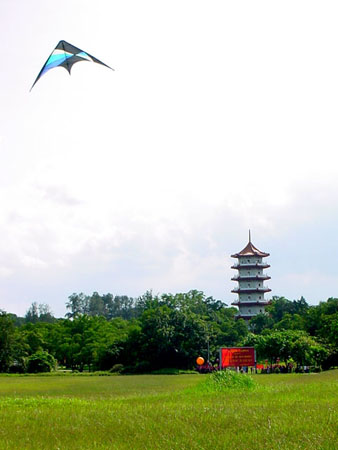
My favourite kite, Jurong East, Singapore, 2003.

I enjoy kite flying. It is a great way to de-stress. I take a few with me when I travel. I have a couple of soft kites that can be folder and rolled so small that they take up no more room than a pair of folded socks.

After reapiring the kite, scanned the Google Reader and cleared all the posts. Saved nineteen for later reading. Did note that a number of the NECC related blog posts reveal a little frustration with the numbers and ‘noise’ of edubloggers in some venues. Too many edubloggers in one place? Is that possible? Is this homophily in action? I feel that a conference full of edubloggers would be almost superfluous given their skills in connecting online already. I guess that is why there is an unconference but even that may have suffered due to homophily. Perhaps I am wrong. I am not there. Wish I was, admittedly.

I shall be catching up with some edubloggers in July hopefully. The last thing I wish to talk about is edublogging, twitter, education technology and the like. I simply wish to eat, drink, chat and converse about politics, people, IVF, weather, wine, beer, pets, house renovations, climate change, whatever. Get my drift? Whichever way the wind blows.

How did I create this post? I scanned the photograph on a HP Photosmart 2570 All-in-One device, rotated and resized it in Adobe Photoshop Elements, saved it as a jpeg using the Save for web… option in Elements, uploaded it to my host using CyberDuck. Of course the blog post was created using WordPress. I also linked to an image in my own gallery.
Visit to Nan Tien Temple
June 29th, 2008

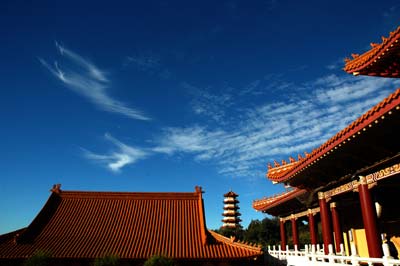
Shao Ping, Lucia and I drove across to the Nan Tien Temple this afternoon. Shao Ping will be conducting some Mandarin lessons at the temple commencing July. We checked out the projection facilities.

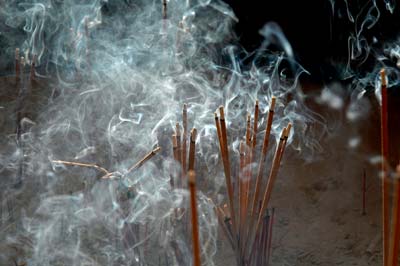
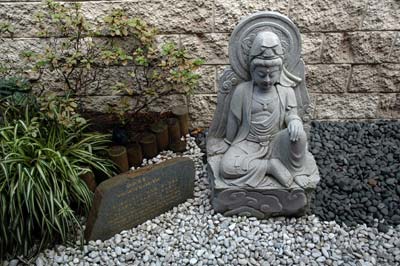
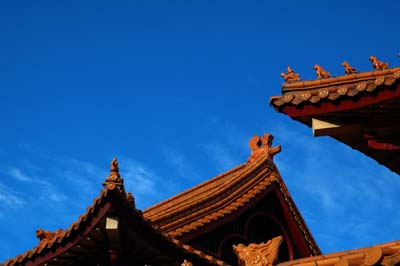
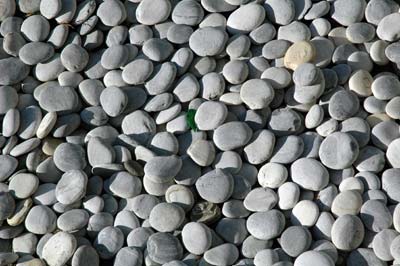
We then took Lucia for a tour around the temple. We have been there many times. It is the largest Buddhist temple in the southern hemisphere. I have photographed the temple before and the images are included in this gallery. The weather was brilliant today. Deep blue sky airbrushed with wondrous cirrus clouds.

How did I create this post? The photographs were taken with a Nikon D-70, uploaded to the MacBook with USB 2.0 card reader and processed with Adobe Photoshop Elements 3.0. I resized each image to a width of 400 pixels and a resolution of 72dpi. I adjusted the levels for some of the images to highlight the light and shade. Sometimes digital images seem a little ‘flat’ and playing with the levels can alleviate that lack of ‘depth’. These processes are debscribed in a guide, step by step. Available in pdf format. Download the images referred to in the guide from this page.

Watershed
June 29th, 2008

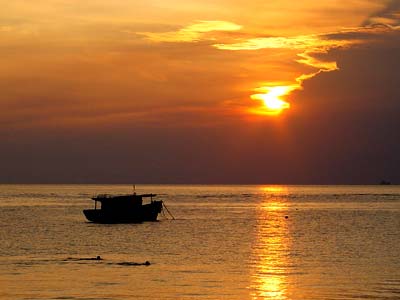
Sunset, Tioman Island, Malaysia, 2001.

Watershed ~ a critical point that marks a division or a change of course; a turning point; a period of time that marks a turning point in a course of action.

Well, I think that we are in the midst of a turning point or a change of course in terms of education so I have decided to give my blog a new name ~ Watershed.

I have been pondering this name change for a while.

The term watershed has been a part of my vocabulary since I read The Sleepwalkers by Arthur Koestler about 30 years ago. In this seminal tome Koestler gives an account of mankind’s changing view of the universe and cosmology. He applied the term watershed to that period of the scientific revolution when Kepler and Galileo forever changed our view of the universe.

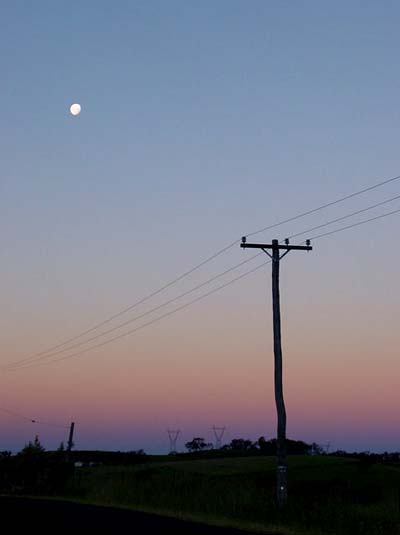
Dusk, Albion Park, NSW. 2006.

Two ancient cultures coalesce
June 28th, 2008

This is an aboriginal interpretation of Zorba The Greek. This performance always lifts my spirits. I am always happy to see anyone enjoying life and not taking themsleves too seriously. As the description on the YouTube page explains…

Frank Djirrimbilpilwuy from Milingimbi has been in the Indigenous Media Industry for many years and has been a long-standing member and supporter of the Top End Aboriginal Bush Broadcasting Association, TEABBA Radio. He has worked Independently in Music and Film for many years also. As the man behind the camera and release of the video, Frank is also representing the dance group who call themselves “The Chooky Dancers”.

Frank has said that he filmed the footage at this years Ramingining Festival on the 30th September 2007 and knew it would be “something special” as soon as he saw the boys rehearsing. “The crowd went wild as you can see in the video, and the classic song Zorba the Greek has now become a hit overnight in the communities and now it seems, everywhere else too.”

A future for our students or not?
June 27th, 2008

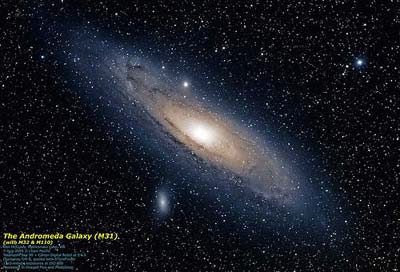
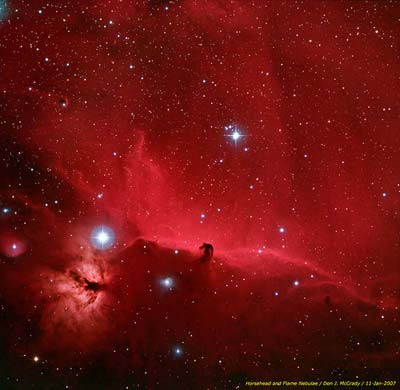
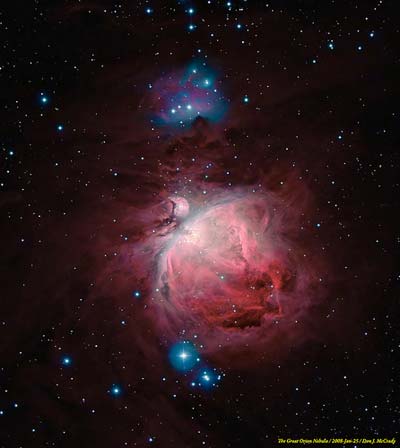
This afternoon my colleague, Wayne, and I were chatting in the car on the way home. Wayne mentioned that he had read that if we look far enough into the universe we should eventually be able to see the back of our head as the universe folds back on itself, apparently. I mentioned I would like to be around if instantenous interstellar travel was ever invented. A few of the places I would like to visit are depicted below.

The Andromeda Galaxy. Photography by DJMcGrady. Some rights reserved.

The Horsehead Nebula and Flame. Photography by DJMcGrady. Some rights reserved.

The Great Nebula In Orion. Photography by DJMcGrady. Some rights reserved.

Of course, things would look a little different given that the light visible in these photographs may have taken hundreds or thousands of light years to reach Earth.

Thinking about the universe reminded me of the relative insignifcance of the planet Earth. Then the thought crossed my mind that its most civilised inhabitants are quite strange. The human race has missed the point. If we were truly an intelligent species would we be working five or more days a week for most of our lives? Would an intelligent species establish a society that is directly contributing to the demise of its planet via climate degradation? Would an intelligent species war with itself?

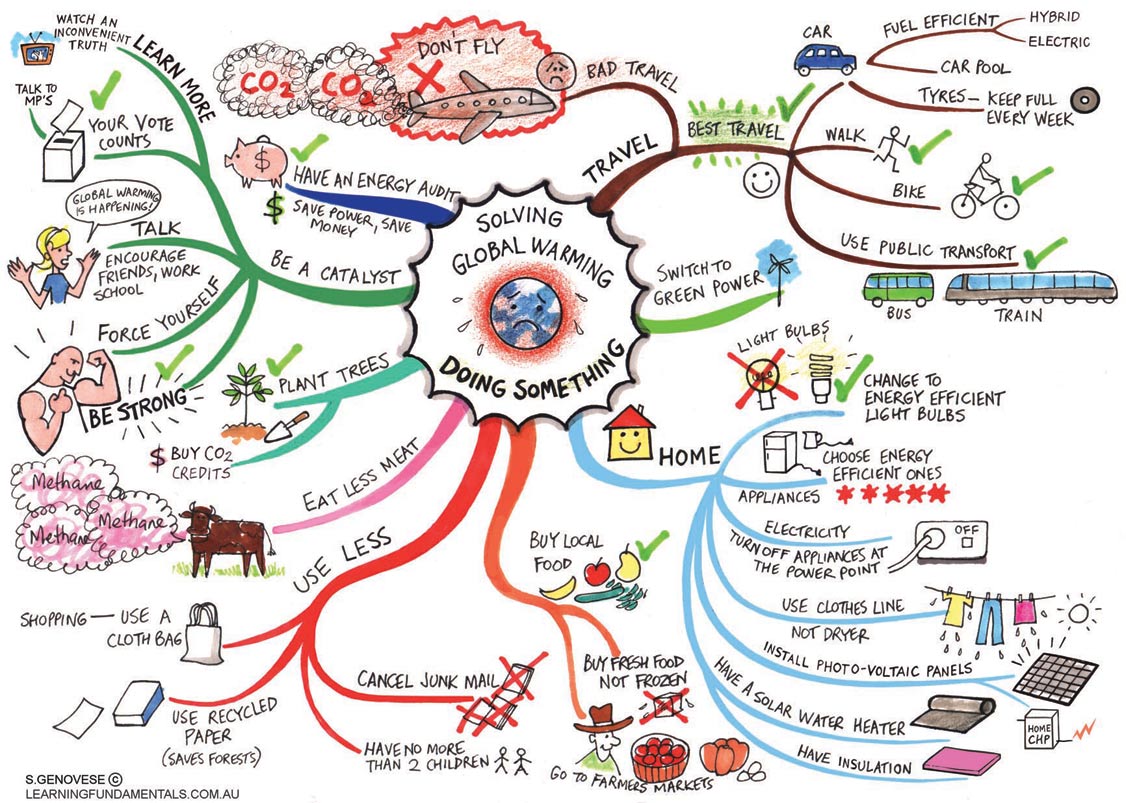
Global Warming. Mind Map prepared by Learning Fundamentals.

Then, thinking about global warming, mass extinctions of plant and animal species, peak oil, melting ice-caps and so on I wonder what will the current generation of students inherit after we shake off our mortal coils? Some of the more recent predictions regarding the health of this planet are rather dire. The planet is not in good shape.

How long will the human race be around for? Will we ever reach the stars? Will the human race see out the next 1000 years? The next 100 years?